

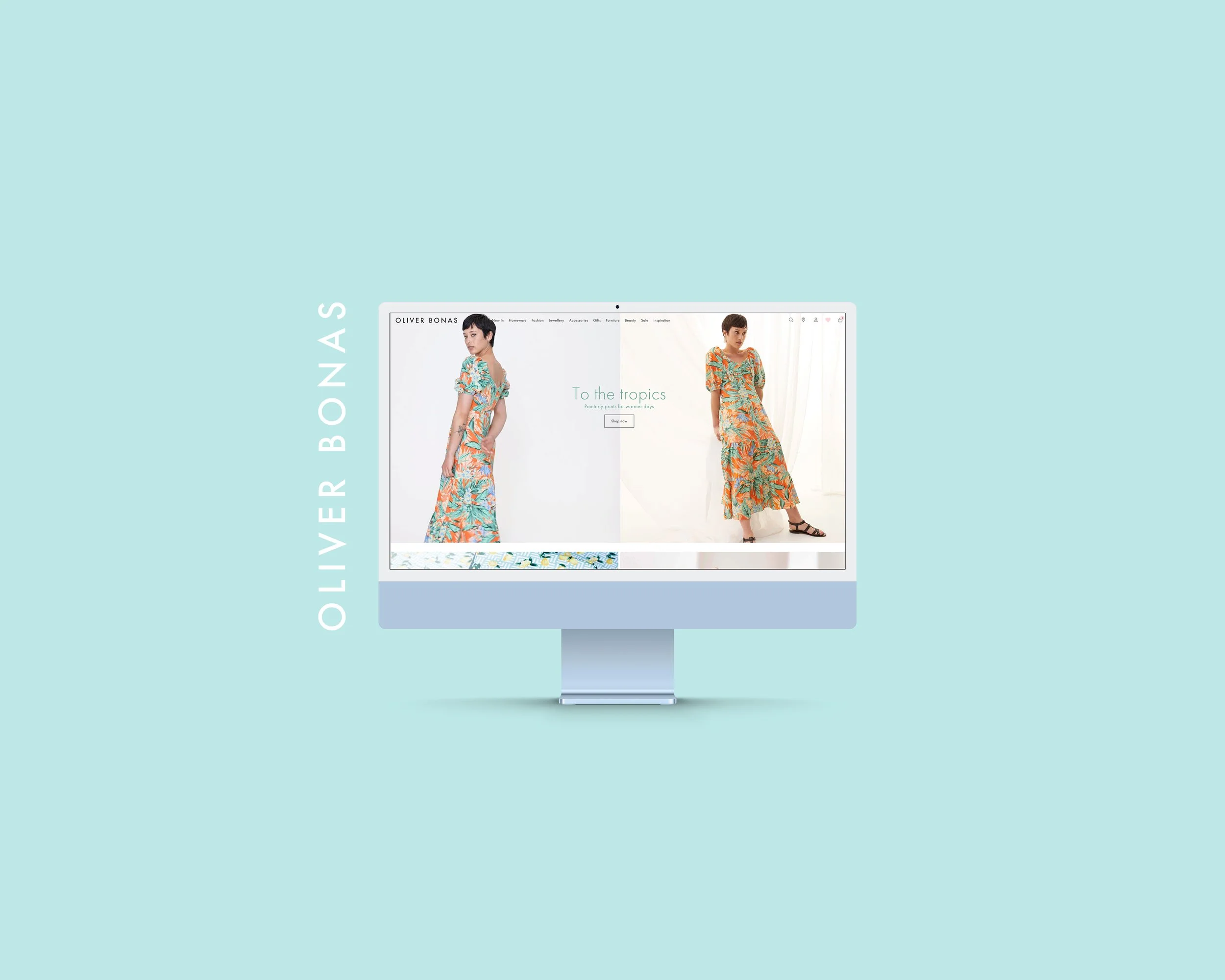
Website Redesign
Oliver Bonas
UX/UI Design
〰️
Brand Refresh
〰️
UX/UI Design 〰️ Brand Refresh 〰️
The Project.
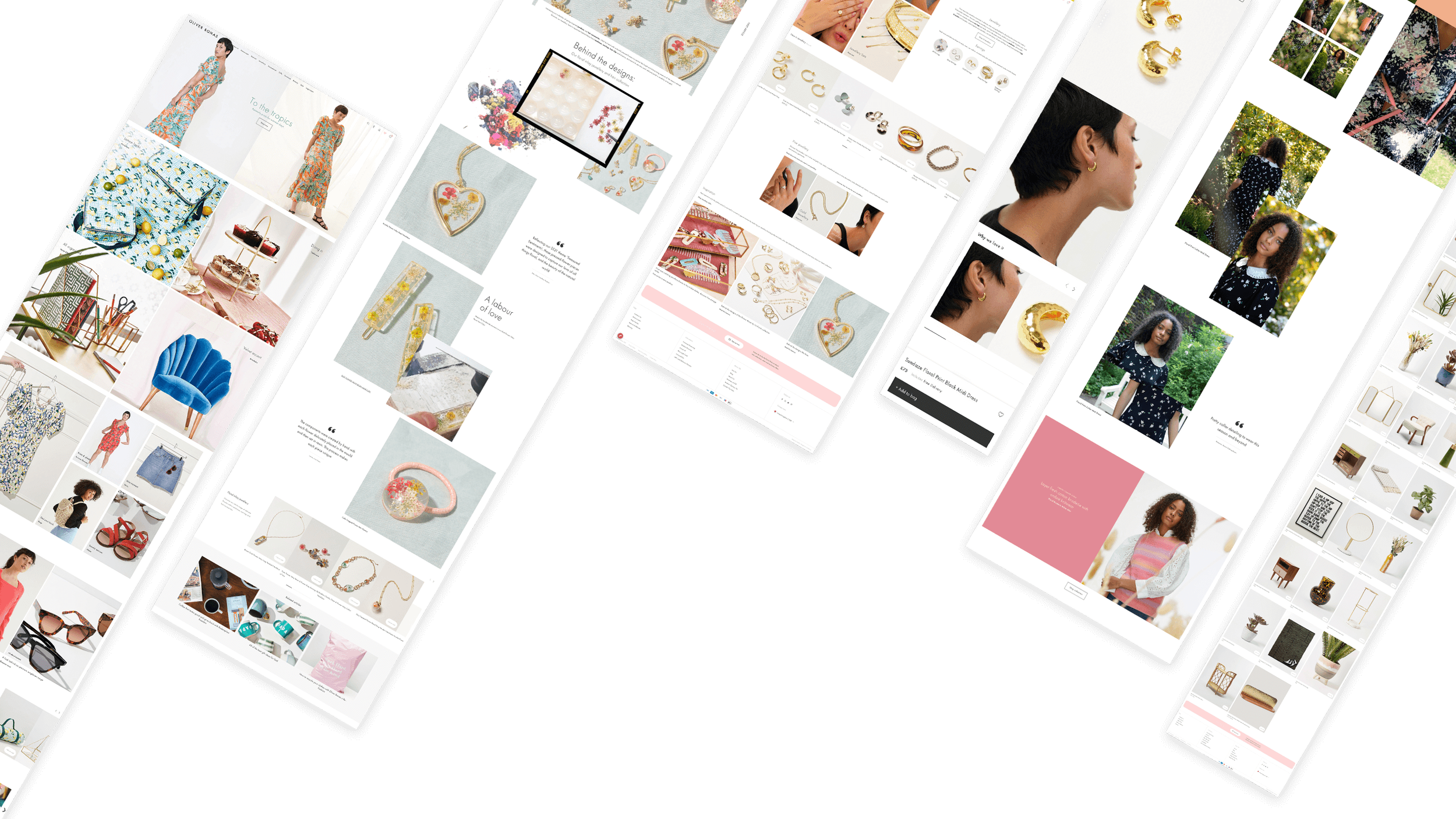
With a rapidly expanding e-commerce presence, proliferated by Covid, the Oliver Bonas website's existing WordPress front-end could no longer support their growth and stylistically felt dated. The solution was the development of a brand new bespoke CMS and complete website redesign, from content components to an overhaul of product pages, delivering a more sophisticated, scalable, and user-centric shopping experience.
This was a vast and complex undertaking that spanned several months – from my appointment as Digital Design and Development Manager at Oliver Bonas in September 2020 through to the launch of the new website in May 2021, with continued iterations thereafter.
Leading the digital design function, I managed a small team of designers and collaborated closely with an external development agency throughout the build, while liaising with key stakeholders across the business internally (including Olly himself).
Joining at the late wireframing stage, I embraced the opportunity to take ownership of the final UX and UI direction across all core templates – including the PLP and PDP – whilst also introducing new ideas for components and features that would enhance the customer experience and aid conversion.
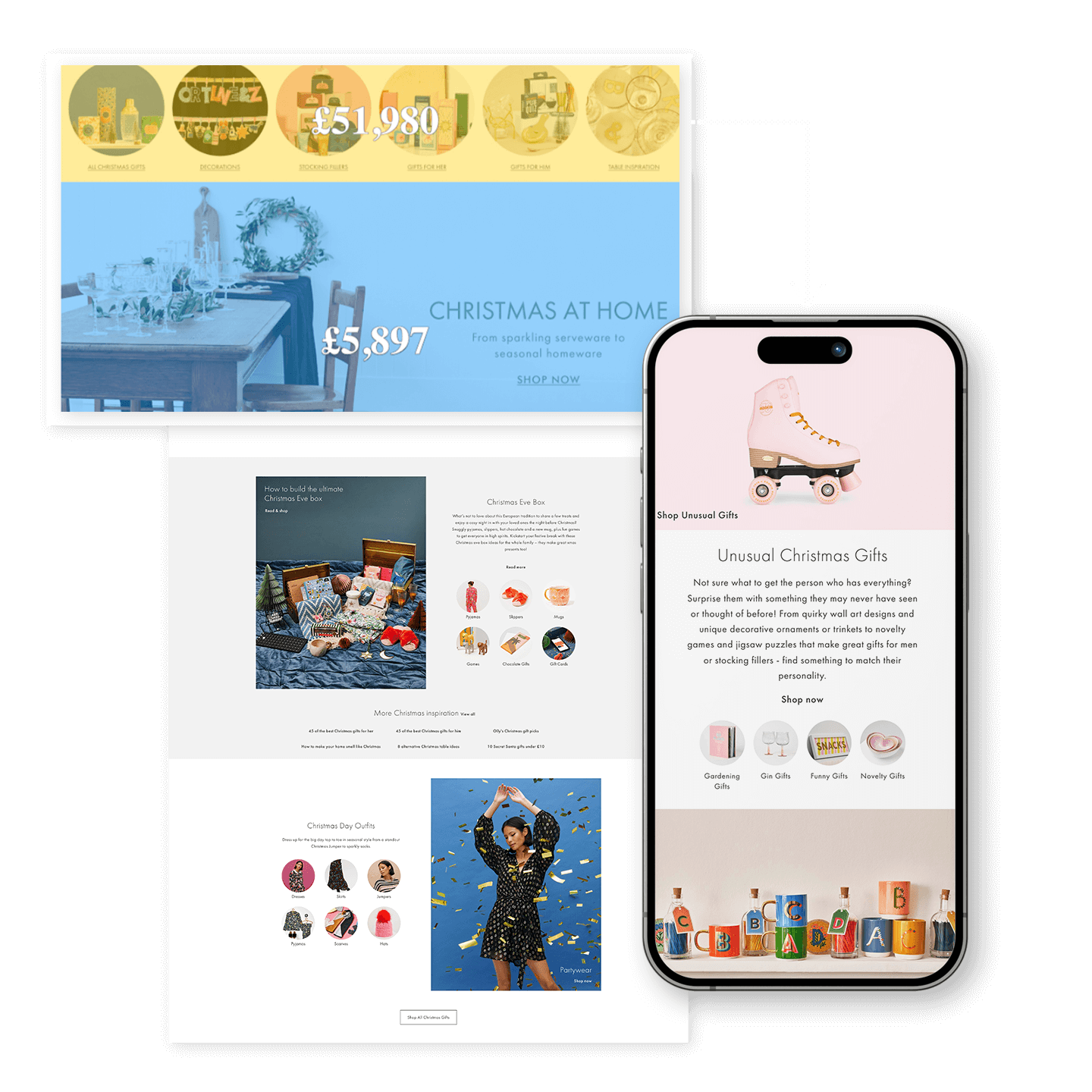
+800% Revenue
Data-Driven Content.
Contentsquare analytics gave the Design team the power to validate decisions with real behavioural insight – revealing not only which content performed best, but which layouts and components encouraged greater engagement through higher click-rate and conversion. While the new site was still in development, this capability allowed live testing on the existing WordPress platform to guide the redesign with evidence-based decisions.
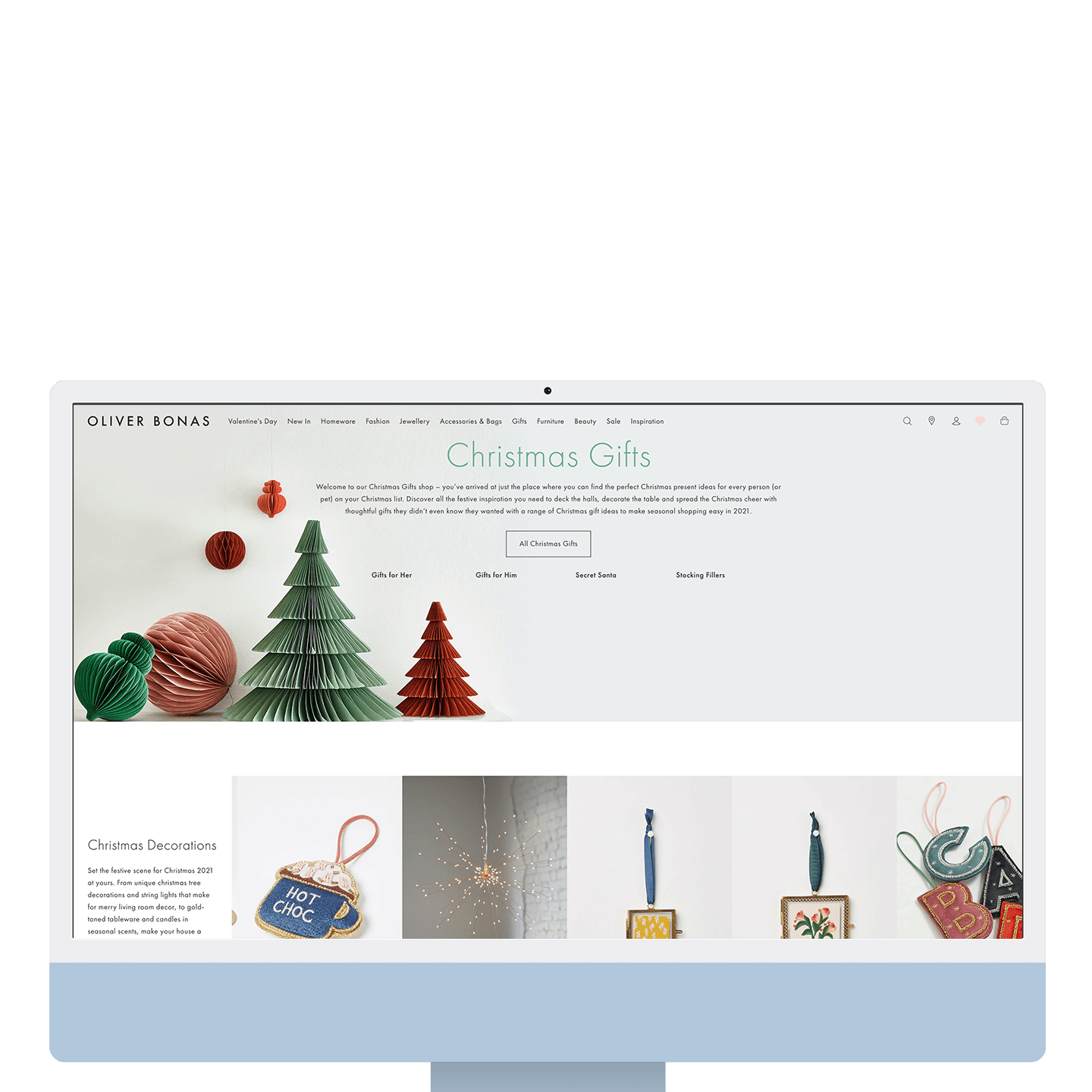
One key experiment took place over the peak Christmas trading period. With multiple festive categories all competing for the homepage hero slot, a new visual navigation component was trialled – a small, circular visual link inspired by the familiar format of Instagram stories. The results were remarkable: the visual navigation outperformed the standard hero tile below by over 800%, driving almost £52,000 in revenue within a single week. Following this success, the component was built into the new CMS and deployed across homepages, landing pages and blog content, becoming a flexible tool for multi-link storytelling — and a powerful, commercial asset for the following year’s Christmas campaign.
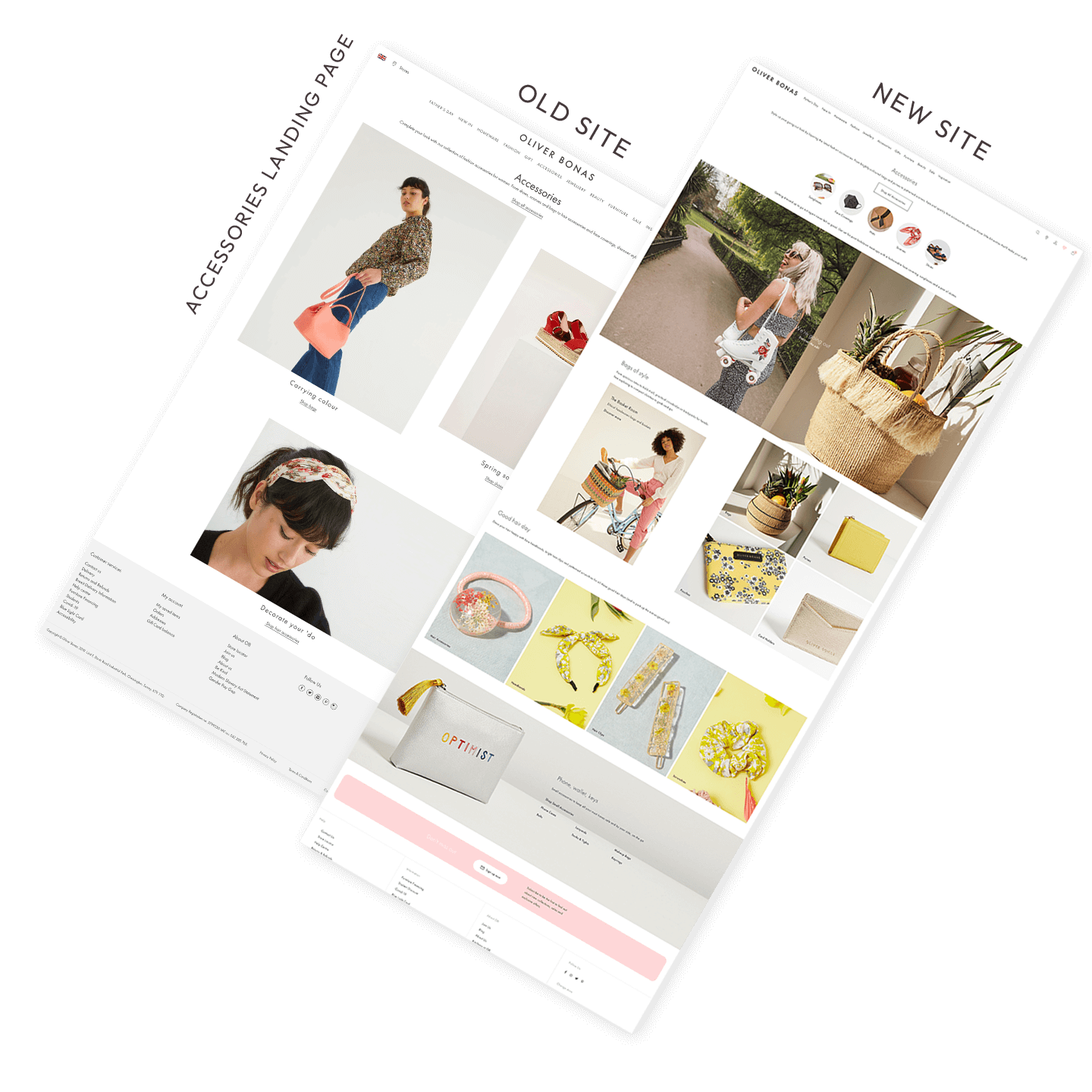
This was just one of the most successful components developed for the new CMS, along with all kinds of image formats; from the editorial overlapping component to slick, shoppable carousels.
The interface flexibility allowed for more dynamic content – namely across our core category landing pages – creating a more visually stimulating experience that was commercially stronger in terms of product offering and SEO.
Product Meets Inspiration.
One of the most significant contributions I pioneered for the redesign was the ‘hybrid PLP’.
Recognising the importance of content pages – such as editorial features and blogs – throughout my retail e-commerce career, I had observed a recurring pattern: while these pages often drove high conversion from more engaged visitors, they suffered from low traffic compared to standard product listing pages (PLPs). Contentsquare analysis confirmed the same was true for OB’s own blogs and inspiration pages.
The hybrid PLP was my solution to bridge this gap, combining shoppable products with inspirational content in a single, seamless experience. Campaign imagery, editorial copy, styling tips, related articles, and even Spotify playlists could surface above the PLP, enriching the user journey and creating more meaningful brand engagement.
Beyond improving conversion, the format also delivered a major SEO advantage. Consolidating relevant content enabled a single, powerful high-ranking page, avoiding URL cannibalisation and maximising the impact of myriad shared links and keywords. In light of this, the Content team were eager to adopt the hybrid PLP, that soon became invaluable across a range of categories, brand collaborations and curated edits.
Examples of hybrid PLPs in place featuring trend-led category curations (Boogie with OB party edit ft playlist), competitions and collections (OB x Artist Residence), and collaborations (Liv Purvis Flower Moon Jewellery).
PDP.
As the final point of the conventional user journey before checkout, the redesigned product detail page (PDP) had to be as smooth and intuitive as possible. A new sticky tray – that swiped up on mobile – housed all key product details, delivery information, reviews, and, most crucially, the Add-to-Bag button, providing visibility from anywhere on the page. This marked a major improvement from the old site, where the CTA could easily be missed. AB testing informed the iteration of the size selection flow, ensuring a smooth path to purchase.
To elevate storytelling at the product level, an ‘It’s in the Detail’ carousel was introduced, showcasing upscale crops and still-life imagery that highlighted unique design features – from fabric texture and fastenings, to embroidery and patterns. Collaborating with the in-house photography studio and Creative Director, I helped standardise the product imagery process for new intake across all categories, creating a consistent, value-driven experience that motivated customer confidence and purchase.
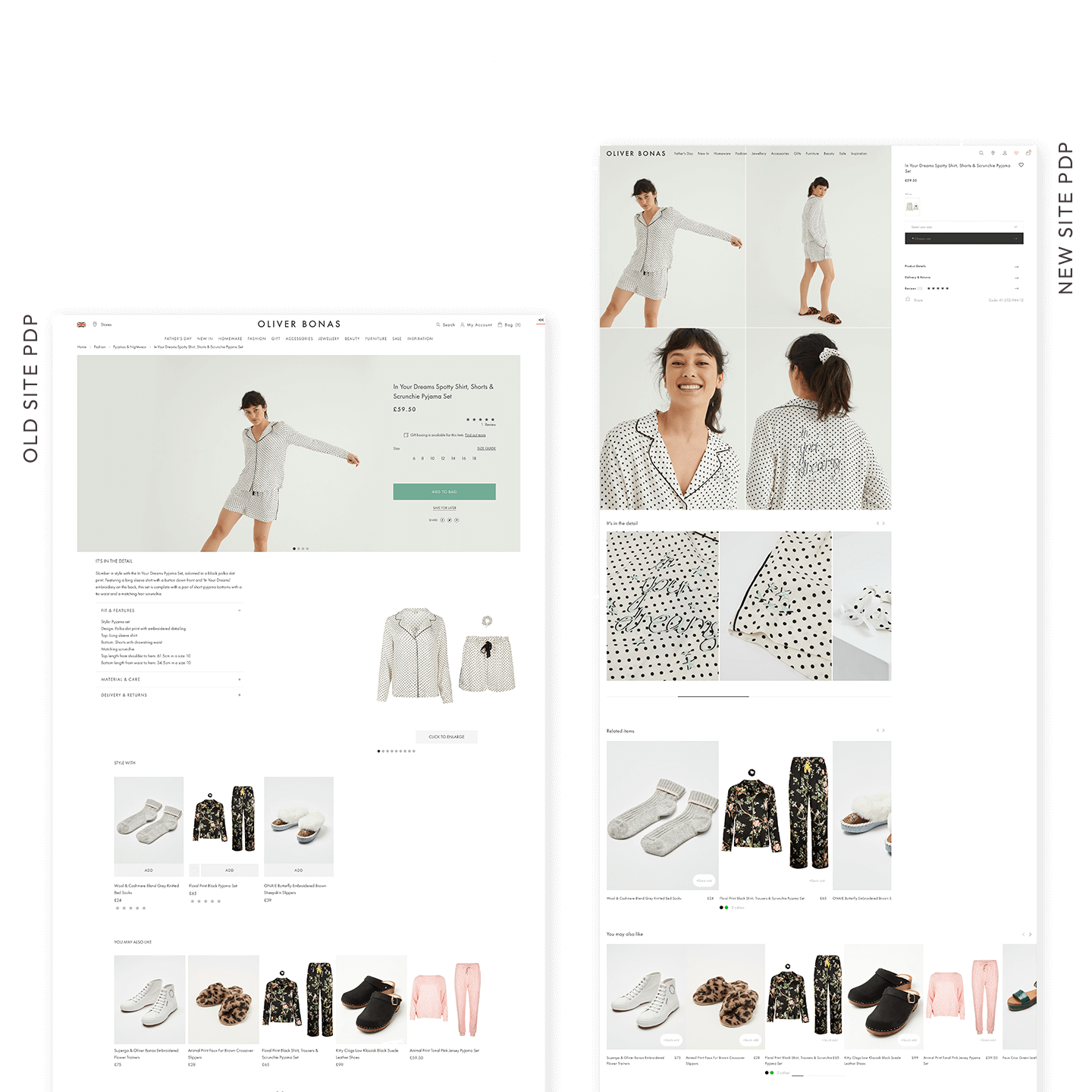
Grid of large imagery, swipable on mobile
Detailed crops carousel & still life
Sticky tray for quick product
details, reviews and checkout
The Result.
Since its launch in May 2021, the bespoke CMS and redesigned website have remained at the core of Oliver Bonas’s e-commerce platform – an enduring testament to the strength and scalability of the redesign. While the site has naturally evolved with stylistic updates and feature improvements since, the foundations of the original design continue to underpin its success.
Public accounts reflect this growth, with turnover rising from £92.8 million in 2021 to £115 million in 2022 following the new site launch. With online sales increasing from 20% pre-pandemic to now 40% of total revenue, it’s rewarding to see how the design has contributed to sustained commercial success. A reflection of the long-term impact of the new UX, scalable architecture, and content-led approach implemented throughout the project.